

How to Configure ndSync Policies in NetDocuments: An Administrator’s Guide
Before anyone at your firm can use ndSync, a Repository Administrator must enable it and configure the appropriate policies. This guide walks through enabling ndSync, understanding the policy options, and properly removing users when they leave the firm.
This article is part of our Ultimate Guide to ndSync series.

ndSync is the Dropbox-like tool for NetDocuments. Before anyone at your firm can start using ndSync, it must be turned on by a NetDocuments Repository Administrator
Enabling ndSync at your firm
Enabling ndSync for Your Firm
Step 1: Access ndSync Policies
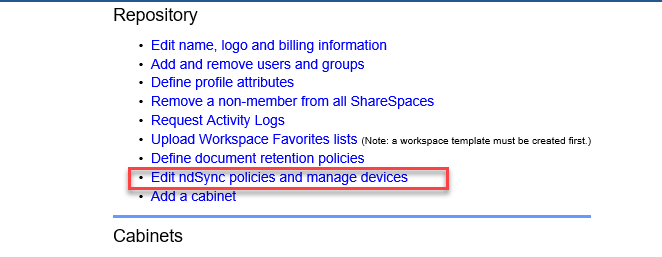
Navigate to Admin in NetDocuments, then select Edit ndSync policies and manage devices.
Step 2: Allow ndSync Access
Under Computer Access, click Allow ndSync to enable the feature for your repository.
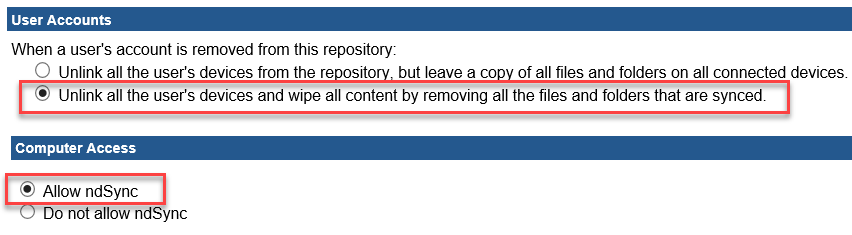
Recommended setting: Under User Accounts, select the option to remove all data when revoking access. This ensures that when you remove someone’s ndSync access, their local synced data is also wiped—critical for security when employees depart.
Managing ndSync Devices
Once ndSync is enabled, you’ll see a table showing all registered devices:
- Name — The computer name
- Owner — The NetDocuments user account associated with that device
This view lets you monitor who has ndSync installed and which machines they are on.
Removing a User from ndSync
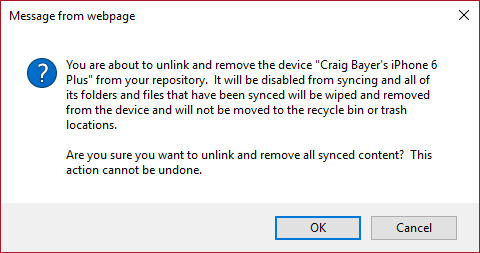
Select each device for the User you want to remove, and choose Unlink and Remove.

Click OK
Best Practices for ndSync Administration
Include ndSync in your offboarding checklist. Before disabling a departing employee’s NetDocuments account, remove their ndSync devices first.
Audit devices periodically. Review the device list quarterly to identify inactive or unknown devices.
Document your policies. Establish clear guidelines for who can use ndSync and on which devices (firm-owned only vs. personal devices).