

If you’ve searched NetDocuments for a document you know exists, come up with nothing, and started to wonder whether somebody deleted it, you’re not alone. Almost every time, the document is fine. You’re looking in the wrong Cabinet.
Why Your Firm Has More Than One Cabinet
A Cabinet is the top-level container in NetDocuments. Everything — Workspaces, folders, documents, security — is contained within one.
Very few firms put everything in a single Cabinet, and for good reason. Client documents need a client and a matter on them. A signed lease, a malpractice policy, or last year’s associate reviews don’t have a matter number and never will. So client work goes in one Cabinet, and firm administration, HR, precedents, and vendor files go in others, each with its own security.
Here’s the part that matters when you can’t find something: browsing and searching happen inside the Cabinet you’re currently in. If you’re in the Client Cabinet and the document you want is in the Firm Administration Cabinet, it won’t show up, no matter how you phrase the search. You have to move to that Cabinet first.
The Two Kinds of NetDocuments Cabinets
When a Cabinet is created, someone decides whether it’s built around Workspaces or around folders. That decision is permanent, and it changes how you get around.
- Workspace Cabinet – Highly structured. Every document is profiled to a client and matter, and the Cabinet is organized into Workspaces — one per matter. Save a document here, and you’ll be prompted to fill out a profile based on your firm’s requirements.
- Folder Cabinet – Works the way folders work on your own computer. Anyone with access can create folders and subfolders and file things wherever they think they belong. No profile, no matter the number.
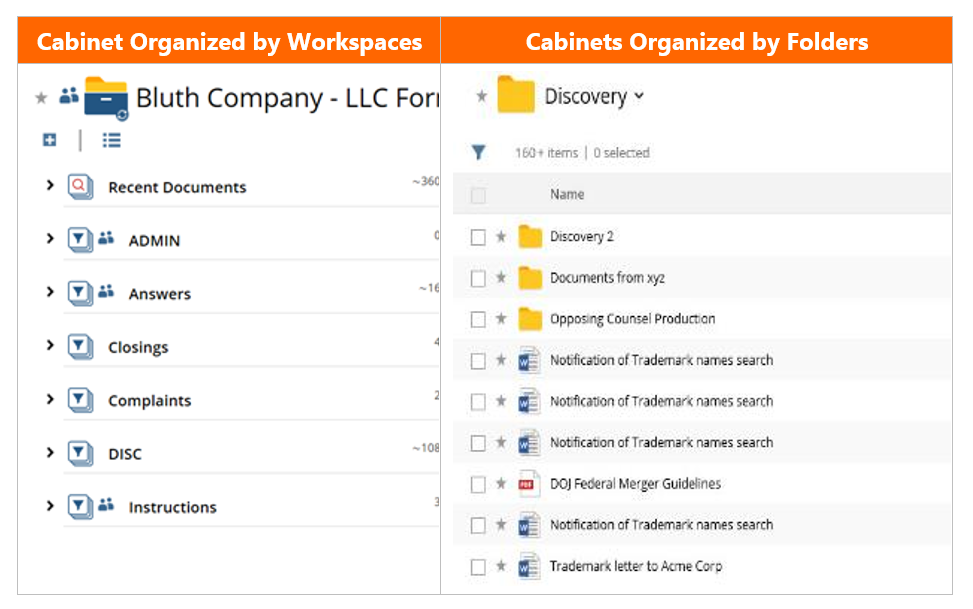
In almost every firm I set up, client documents live in a Workspace Cabinet and everything else lives in one or more Folder Cabinets.
How to tell which one you’re in: if the page opens on a list of matters or a Workspace, it’s a Workspace Cabinet. If it opens on a folder tree, it’s a Folder Cabinet. The switch works differently in each, which is exactly where people get stuck.
Part 1: Switch Cabinets from a Workspace Cabinet
Step 1: Click the Orange Button in the Top Right Corner
The orange button in the upper right of the NetDocuments window is your Cabinet indicator. It tells you where you are.
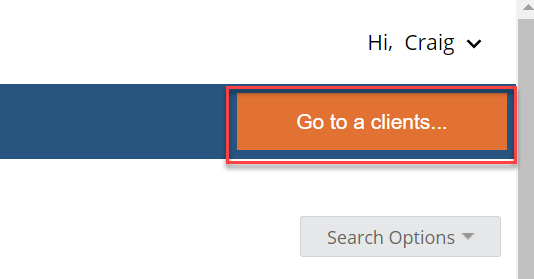
Step 2: Click the Arrow Next to It
The arrow opens the list of every Cabinet you have access to.
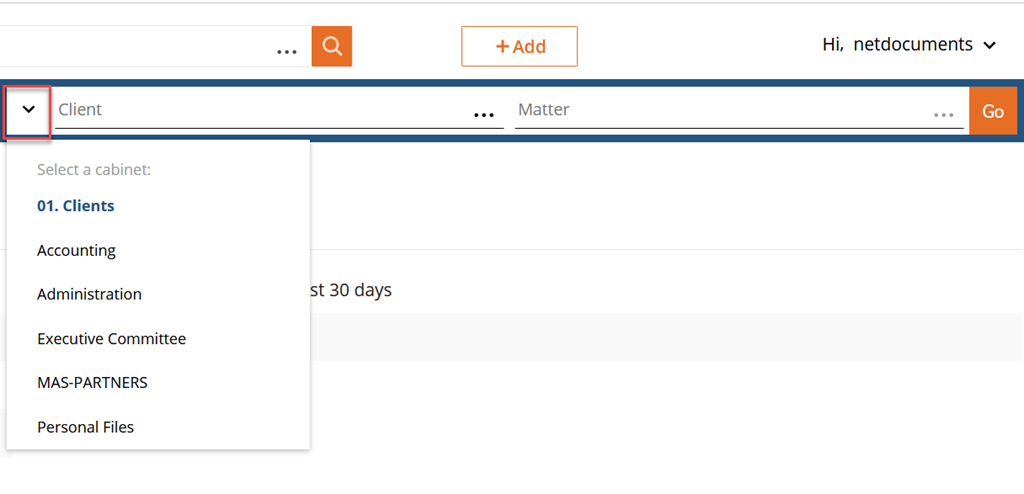
Step 3: Choose the Cabinet You Want
Click it. NetDocuments drops you into that Cabinet, and from here on, your searches and your browsing run against it instead.
Part 2: Switch Cabinets from a Folder Cabinet
Step 1: Click the Three Lines in the Top Left Corner
The three-line menu in the upper left opens the navigation panel.
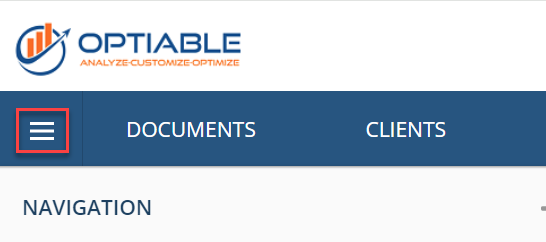
Step 2: Click the Arrow Next to the Cabinet Name
Same idea as the orange button, but in a different corner of the screen. The arrow lists the Cabinets available to you.
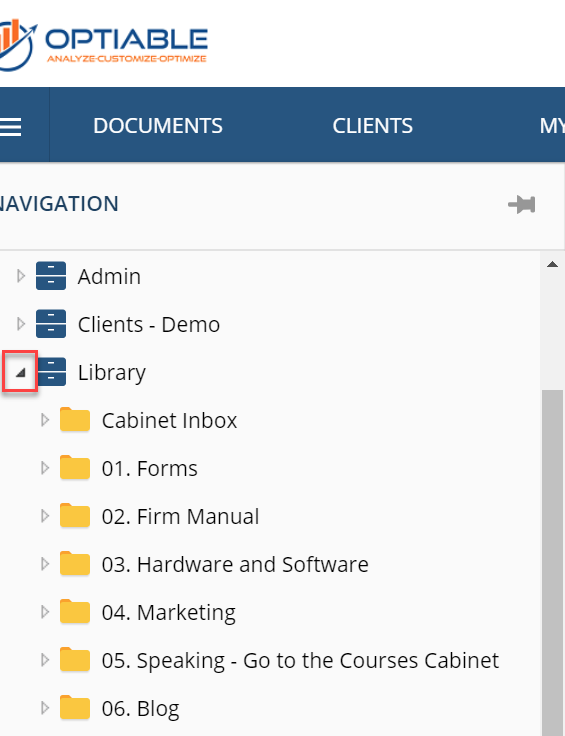
Step 3: Pick the Cabinet, Then Click Through to Your Folder
Choose the Cabinet, then use the folder tree to get to the folder you want.
Don’t See the Cabinet You’re Looking For?
Then this isn’t a navigation problem. If a Cabinet doesn’t appear in that list, you don’t have rights to it — NetDocuments only shows you Cabinets you’ve been given access to, so an empty-looking list is a permissions question, not a missing Cabinet. Ask your IT team or your firm’s NetDocuments administrator to add you to the group that has access. I’ve written up why a new user can’t see a Cabinet and how to fix it if you’re the person who has to solve it.
Set the Cabinet You Actually Live In as Your Default
If you spend all day in the Client Cabinet, NetDocuments should open there every morning. You can set that once and stop thinking about it — see how to set a default Cabinet in NetDocuments.
The Result
Two clicks in the top right if you’re in a Workspace Cabinet, two in the top left if you’re in a Folder Cabinet. Once you know which corner to look in, moving between NetDocuments Cabinets stops being a mystery, and the documents you thought were gone turn out to have been sitting there the whole time.
Need Help?
If your users regularly can’t find documents, or you’re not sure your firm’s Cabinet structure and security are set up as they should be, that’s worth an hour of someone’s time before it becomes a habit. We can look at how your Cabinets are organized, who has access to what, and whether the split still makes sense for how your firm works now.
Schedule a free consultation at go.oncehub.com/optconsult.
Craig Bayer is the founder of Optiable and has guided over 550 law firms through NetDocuments implementations since 2010, specializing in firms with 10 to 150 users.
CONNECT WITH CRAIG → https://www.linkedin.com/in/craigbayer/