

Spending too much time hunting for documents in NetDocuments? You’re not alone. Most attorneys waste 10-15 minutes per day searching for files—that’s nearly 2 hours per week that could be spent on billable work.
The good news? NetDocuments has powerful advanced search features that most users never discover. In this guide, you’ll learn 10 essential search hacks that will transform you from a basic searcher into a NetDocuments power user. Whether you’re tracking down unprofiled documents, finding locked files, or searching across multiple fields simultaneously, these techniques will save you hours every week.
1. Search Multiple Fields Simultaneously {#search-multiple-fields}
What It Does
Search across both the Name field and Comments field at the same time, casting a wider net to find documents that mention your search term in either location.
When to Use It
- You’re not sure if the information was saved in the document name or comments.
- Searching for matter numbers that might appear in either field
- Looking for client names that could be referenced anywhere
How to Do It
Search Code:
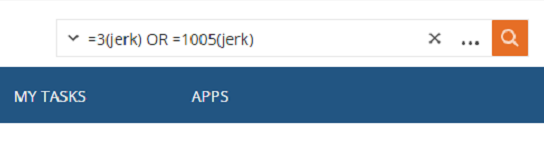
=3(your-search-term) OR =1005(your-search-term)
Example: To find all documents mentioning “Anderson” in either the name or comments:
=3(Anderson) OR =1005(Anderson)
Why This Works
- =3 is the field code for the Name attribute
- =1005 is the field code for the Comments attribute
- The OR operator tells NetDocuments to show results from either field
Pro Tip
You can chain multiple field codes together. Add =2(Anderson) to also search the Description field.
2. Find Unprofiled Documents (Blank Attributes) {#blank-attributes}
What It Does
Identifies all documents missing a specific attribute value—critical for maintaining clean, compliant document repositories.
When to Use It
- Quarterly audits: Find documents lacking required metadata
- Pre-migration cleanup: Identify profiling gaps before moving to a new system
- Compliance checks: Ensure all documents meet your firm’s profiling standards
- User training: Show new users examples of improperly saved documents
How to Do It
Search Code:
NOT {*}
Step-by-Step:
- Open Advanced Search in NetDocuments
- Click on the attribute field you want to check (e.g., “Doc Type”)
- Paste:
NOT {*}Into that field - Click Search

This returns all documents where the Doc Type field is empty.
Real-World Example
A 50-attorney firm ran this search on their “Matter Number” field and identified over 2,300 documents that weren’t adequately assigned to matters—a central billing and organization issue they could now fix.
Pro Tip
Combine with date filters to find recently added unprofiled documents:
- Set “Modified Date” to “Last 30 days.”
- Add
NOT {*}to your target field - This helps you catch profiling issues before they accumulate
3. Search Documents and Emails Together {#docs-and-emails}
What It Does
Returns both documents AND emails in a single search, while excluding folders, filters, and saved searches.
When to Use It
- You need a complete picture of all content related to a matter
- Searching for correspondence and work product together
- Building a timeline that includes both emails and documents
How to Do It
Search Code:
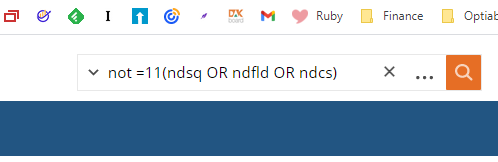
not =11(ndsq OR ndfld OR ndcs)
What This Excludes
- ndsq = Saved searches
- ndfld = Folders
- ndcs = Cabinet shortcuts
By excluding these item types, you get clean results showing only actual documents and emails.
Why Use This Instead of the Default?
NetDocuments’ standard Advanced Search only lets you choose “Documents Only” or “Emails Only.” This hack gives you both without the clutter of organizational items.
Pro Tip
Save this as a Filter for one-click access:
- Run the search with your code
- Click “Save as Filter”
- Name it “All Docs & Emails.”
- Access instantly from your Personal workspace
4. Locate Checked-Out Documents {#checked-out}
What It Does
Shows all documents currently checked out to users—essential for managing document editing conflicts.
When to Use It
- Before leaving for vacation: Check what files you have checked out
- Collaboration issues: See if someone has a document locked
- Repository cleanup: Find documents checked out for extended periods
- Matter closeout: Ensure all documents are checked back in
How to Do It
- Open Advanced Search
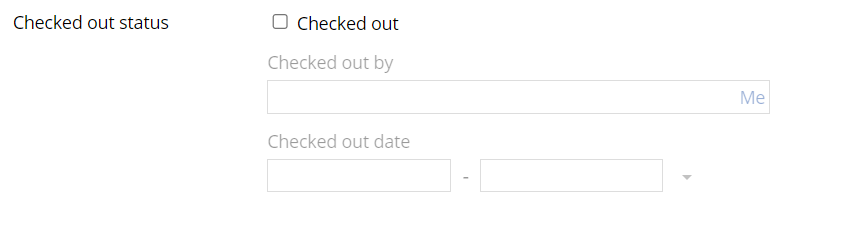
- Click “Show more options” at the bottom of the search panel
- Look for the “Checked Out” filter option
- Select your criteria
Search Options
- All checked out documents: See everything checked out across accessible cabinets
- Checked out to me: View only documents you currently have locked
- Checked out to a specific user: Filter by username to see another user’s checked-out files
Real-World Scenario
An attorney went on unexpected medical leave with 12 documents checked out. Using this search, the paralegal identified and (with admin help) checked in all documents so the team could continue working.
Pro Tip
Run this search before system maintenance or upgrades. Checked-out documents can sometimes cause sync issues during updates.
5. Find Deleted Items {#deleted-items}
What It Does
Searches for documents that have been deleted but are still in the NetDocuments recycle bin (recoverable for 30 days).
When to Use It
- Accidental deletion recovery: Someone deleted an important file
- Audit trails: Review what’s been deleted from a matter
- Storage cleanup verification: Confirm intentional deletions processed correctly
- Training: Show new users how the recycle bin works
How to Do It
- Open Advanced Search
- Click “Show more options.”
- Enable the “Include deleted items” checkbox
- Run your search

Deleted items appear with a strikethrough and can be restored by right-clicking and selecting “Restore.”
Important Notes
- Deleted items are permanently removed after 30 days
- You can only see deleted items from cabinets where you have access
- Some firms configure shorter retention periods
Pro Tip
Combine with other filters:
- Search for deleted items modified by specific users
- Filter by date range to see recent deletions
- Use with the matter number to audit matter-specific deletions
6. Search for Filters {#search-filters}
What It Does
Finds saved NetDocuments filters by matching their file extensions.
When to Use It
- Finding shared filters: Locate filters created by colleagues
- Filter organization: Audit existing filters across your workspace
- Template building: Find example filters to copy and modify
- Cleanup: Identify outdated filters to archive
How to Do It
Search Code: Type in the Extension field:
ndflt

All saved filters will appear in your results.
What Are Filters?
Filters are saved searches in NetDocuments that let you:
- Create dynamic document lists
- Build matter-specific views
- Share search criteria with colleagues
- Organize documents without moving them
Pro Tip
Create a “Filter Library” workspace:
- Search for
ndflt - Bookmark useful filters you find
- Copy filter logic for your own custom searches
- Share best-practice filters with your team
7. Find All Locked Documents {#locked-documents}
What It Does
Identifies all documents with security locks applied, preventing editing or deletion.
When to Use It
- Security audits: Review which documents have enhanced protection
- Matter management: Find locked documents before matter archival
- Compliance: Ensure privileged documents are properly secured
- Troubleshooting: Identify why users can’t edit specific files
How to Do It
Search Code:
not =11(ndsq OR ndfld OR ndcs) =202(T)
Understanding the Code
not =11(ndsq OR ndfld OR ndcs)= Exclude non-document items=202(T)= Security Lock attribute set to TRUE
Pro Tip
Combine with cabinet or matter filters to see locked documents in specific areas:
- Run the locked documents search
- Add a cabinet or matter number filter
- Export the list for documentation
8. Built-in Quick Search Options {#quick-search}
What They Do
NetDocuments provides four pre-configured search shortcuts for common scenarios.
The Four Quick Searches
📧 Emails From Me
What it shows: All emails you sent in the past 14 days
Use case: “Did I send that settlement offer email?”
Location: Advanced Search dropdown
📨 Emails To Me
What it shows: All emails sent to you in the past 14 days
Use case: “Where’s that client response I received?”
Location: Advanced Search dropdown
📄 My Recently Created Documents
What it shows: All documents you created in the last 14 days across all cabinets
Use case: “Where did I save that draft I started yesterday?”
Location: Advanced Search dropdown
⚠️ Unprofiled Documents
What it shows: Documents you saved that lack complete profiling
Use case: “What documents do I need to properly profile?”
Location: Advanced Search dropdown
Customization Tips
While these searches default to 14 days, you can modify them:
- Run the quick search
- Adjust the date range in Advanced Search
- Save as a new Filter with your preferred timeframe
- Name it clearly (e.g., “My Docs – Last 30 Days”)
Pro Tip: Create Your Own Quick Searches
Save frequently used searches as filters:
- “Documents I edited this week.”
- “Client emails from the last quarter”
- “All my Word documents from [Matter Name]”
9. Advanced Search Operators {#advanced-operators}
Essential Operators Every User Should Know
AND Operator
Use: Narrow results by requiring multiple criteria
Smith AND settlement
Returns only documents containing both “Smith” AND “settlement.”
OR Operator
Use: Broaden results by accepting either criteria
Smith OR Jones
Returns documents containing either “Smith” OR “Jones” (or both)
NOT Operator
Use: Exclude specific terms from results
contract NOT draft
Returns documents with “contract” but excludes any containing “draft”
Quotation Marks
Use: Search for exact phrases
"attorney-client privilege"
Returns only documents with this exact phrase
Wildcard (*)
Use: Find variations of a word
medic*
Returns: medical, medication, medicate, medicine, etc.
Combining Operators
Complex Example:
("settlement agreement" OR "settlement offer") AND Smith NOT draft
This finds:
- Documents containing either the exact phrase “settlement agreement” or “settlement offer.”
- That also mentions “Smith”
- But excludes any documents containing “draft”
Pro Tip: Parentheses Control Order
Use parentheses to group conditions, just like in math:
(Smith OR Jones) AND (settlement OR verdict)
10. Save your Most-Used Searches{#saved-searches}
Don’t rebuild complex searches every time:
- Run your advanced search
- Click the Drop and choose “Save Search”
- Name it descriptively (“Active Matters – Past 30 Days”)
Time saved: 5-10 minutes per day
Common Search Mistakes to Avoid
❌ Being Too Broad
Mistake: Searching just “contract”
Better: “employment contract” AND client name AND date range
❌ Forgetting Wildcards
Mistake: Searching “analyze”
Problem: Misses “analysis,” “analytical,” “analyzer”
Better: “analyz*”
❌ Not Using Filters
Mistake: Running the same complex search daily
Better: Save it as a filter for one-click access
❌ Ignoring Date Ranges
Mistake: Searching all documents ever created
Better: Limit to relevant date ranges (reduces results by 80-90%)
❌ Overlooking Profiling Issues
Mistake: Assuming all documents are properly profiled
Better: Regularly run blank attribute searches to catch gaps
Troubleshooting Search Issues
“I’m getting too many results.”
Solutions:
- Add date range filters
- Include more specific keywords
- Use exact phrase searches with quotation marks
- Filter by document type or matter
- Use the NOT operator to exclude irrelevant terms
“I’m not finding what I know exists.”
Solutions:
- Check your cabinet access permissions
- Try wildcard searches for spelling variations
- Search within document content, not just names
- Verify the document wasn’t deleted (search deleted items)
- Check if someone has it checked out
- Try broader search terms initially, then narrow down
Final Thoughts
Mastering NetDocuments search transforms it from a document storage system into a powerful knowledge management platform. These 10 search hacks represent years of best practices from our work with hundreds of law firms.
Start with the techniques most relevant to your daily work:
- Document-heavy users: Focus on multi-field searches and filters
- Email-centric users: Master the email search shortcuts
- Administrators: Prioritize blank attribute and locked document searches
- Matter managers: Perfect the documents + emails combined search
The time you invest in learning these searches pays dividends every single day.