

Every time a law firm hires Optiable, they sign a proposal. It’s the same document every time, with the same two signers and the same signature blocks in the same places. The only thing that changes is who’s signing.
If you’re rebuilding that document from scratch in DocuSign each time — dragging signature fields onto the page, retyping the subject line, retyping the message — you’re doing several minutes of work that a template does for you in one click.
Here’s how to build the template once in DocuSign and then fire it off from NetDocuments whenever you need it.
What You Need First
- A DocuSign account with template access — you’re building and storing a reusable template, not sending one-off envelopes.
- Template Matching turned on in DocuSign — this is the setting that makes the whole thing work. Without it, DocuSign won’t recognize the document NetDocuments hands over, and you’ll be placing signature fields by hand anyway.
- The NetDocuments DocuSign integration enabled — if you don’t see Send to DocuSign under the More menu, ask your IT team or your consultant to switch it on.
Why This Takes a Throw-Away Recipient
The steps below have one bit that looks wrong the first time you do it: you add a recipient you’re about to delete.
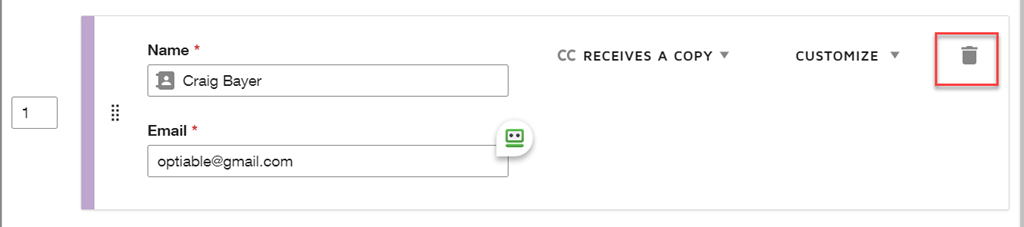
Here’s what’s happening. NetDocuments won’t hand the document off to DocuSign without a recipient on it, so you give it one — a fake person, set to Receives a Copy so nothing gets sent to them. Once DocuSign has the document, Template Matching recognizes it and swaps in the recipient list from your template. Then you delete the placeholder and fill in the real signer.
It feels like a workaround because it is one. But it’s two extra clicks, and it’s what lets one template serve every client you’ll ever send this document to.
The same logic explains the blank message field in Step 4. Your template already has the message you want. Anything you type in NetDocuments would override it.
Part 1: Build the Template in DocuSign
Step 1: Create a New Template and Upload the Document
In DocuSign, go to Templates → New Template and upload the document you send over and over — a proposal, an engagement letter, a routine consent form.
Step 2: Add Every Signer the Document Needs
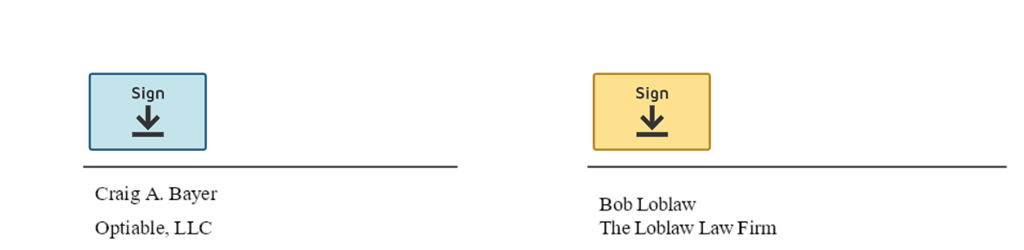
For my proposal, that’s two people: the law firm signing up and me.
Add both. You’re defining the roles now so you never have to think about them again.
Step 3: Leave the Outside Signer’s Name and Email Blank
This is the part that makes the template reusable, and it’s the step people get wrong.
For yourself — anyone inside the firm who signs every copy — fill in the name and email. For the client, the opposing party, whoever is signing from outside, leave both fields empty. That person changes every single time. Hard-code them, and you’ve built a template for exactly one deal.
Step 4: Place the Signature and Text Fields
Drop a signature field everywhere each person signs, plus any text fields they need to complete — dates, titles, printed names.
Take the extra minute here. Every field you place correctly now is a field you never place again.
Step 5: Write the Template Message and Save
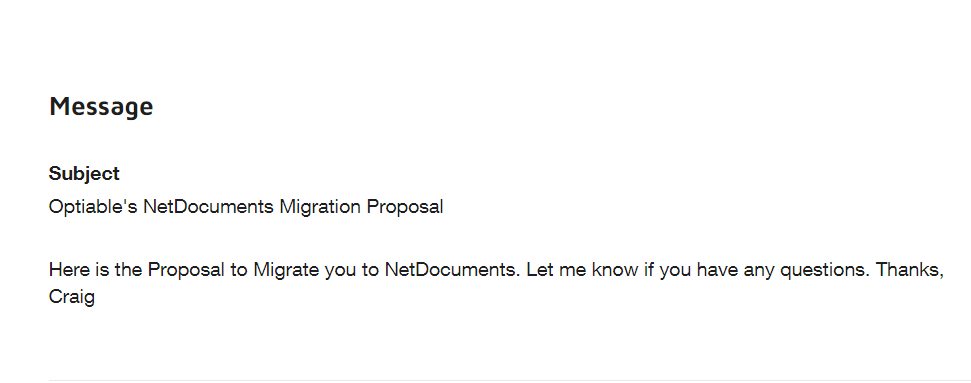
Write the standard message you want to go out with this document every time, then save the template.
Write a standard subject line too, if you like, but know that NetDocuments will overwrite it with whatever you type when you send. The message survives; the subject doesn’t.
Part 2: Send a Document from NetDocuments
Step 1: Select the Document and Choose Send to DocuSign
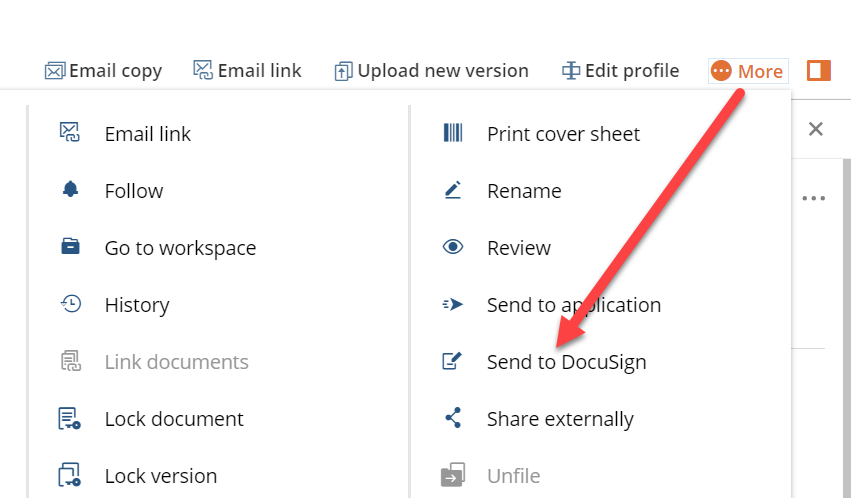
Check the box next to the document, click More, and choose Send to DocuSign.
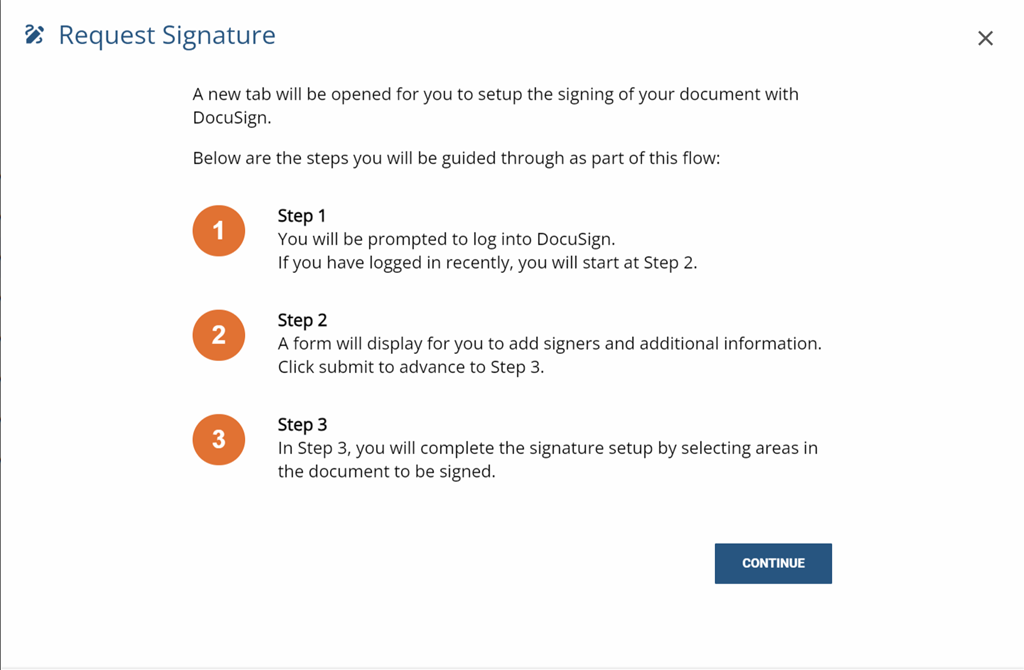
Step 2: Click Continue
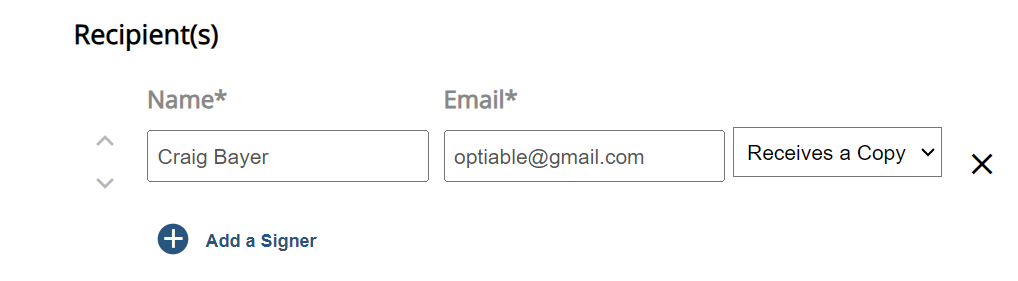
Step 3: Add a Throw-Away Recipient Set to Receives a Copy
Type in a fake name and address. Set the role to Receives a Copy so nothing actually goes out to them.
Your template is about to replace this person entirely.
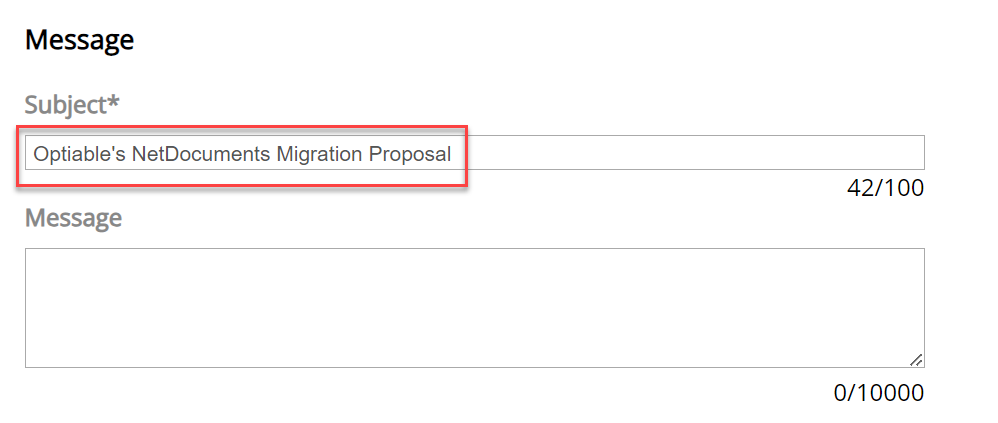
Step 4: Add a Subject and Leave the Message Blank
Fill in the subject — this is the one that reaches your signer. Leave the message empty so your template’s message comes through.
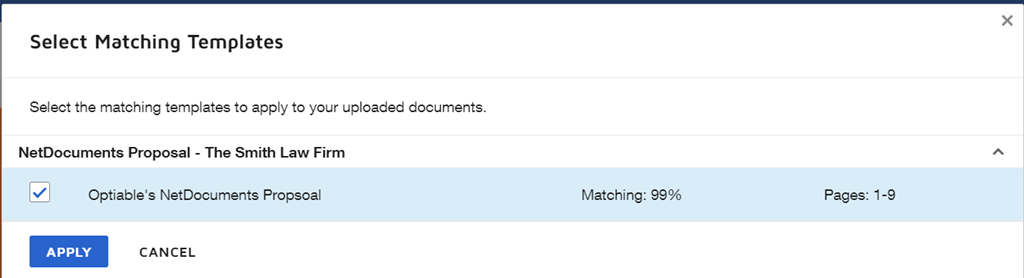
Step 5: Click Apply
With Template Matching on, DocuSign now recognizes the document and applies your template — signature fields, roles, message, and all.
Step 6: Click Edit Recipients
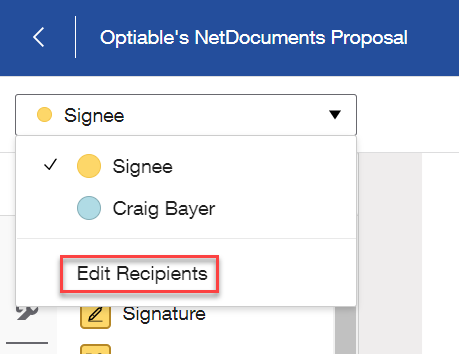
Step 7: Delete the Throw-Away Recipient
Remove the placeholder from Step 3. It’s done its job.
Step 8: Add the Real Signer’s Name and Email Address
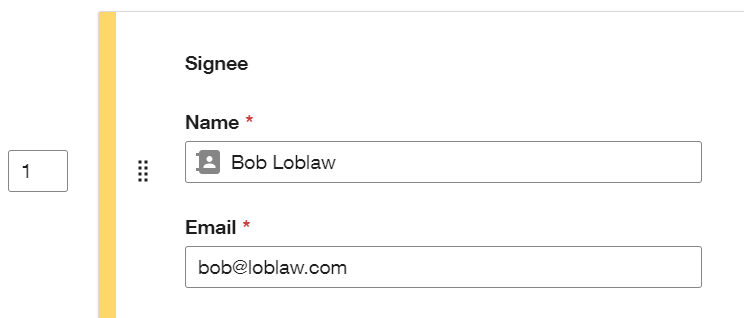
Fill in the name of the person who’s actually signing, then send.
The Result
You place the signature fields once. After that, sending a proposal for signature is: check a box, pick the template, type one subject line, and type one name and email address.
For a document your firm sends every week, that’s the difference between a five-minute job and a thirty-second one — and every copy that goes out is identical, because it came from the same template instead of somebody’s memory.
Need Help?
If Send to DocuSign isn’t in your More menu, or your template isn’t matching when it should, that’s usually a settings problem on one side or the other, and it’s quick to sort out. We can look at your DocuSign and NetDocuments configuration together and get the integration working properly — usually in a single call.
Schedule a free consultation at go.oncehub.com/optconsult
Craig Bayer is the founder of Optiable, an award-winning document management consulting firm that helps law firms get the most out of NetDocuments. Specializing in firms with 10 to 150 users, he has guided over 550 law firms across the United States and Canada through NetDocuments implementations since 2010.